Adarc Computer established in the year 2007, has emerged as a major constituent of the IT Re-distribution industry in every part of UAE. Currently, Adarc Computer is the authorized dealer of global leading brands.
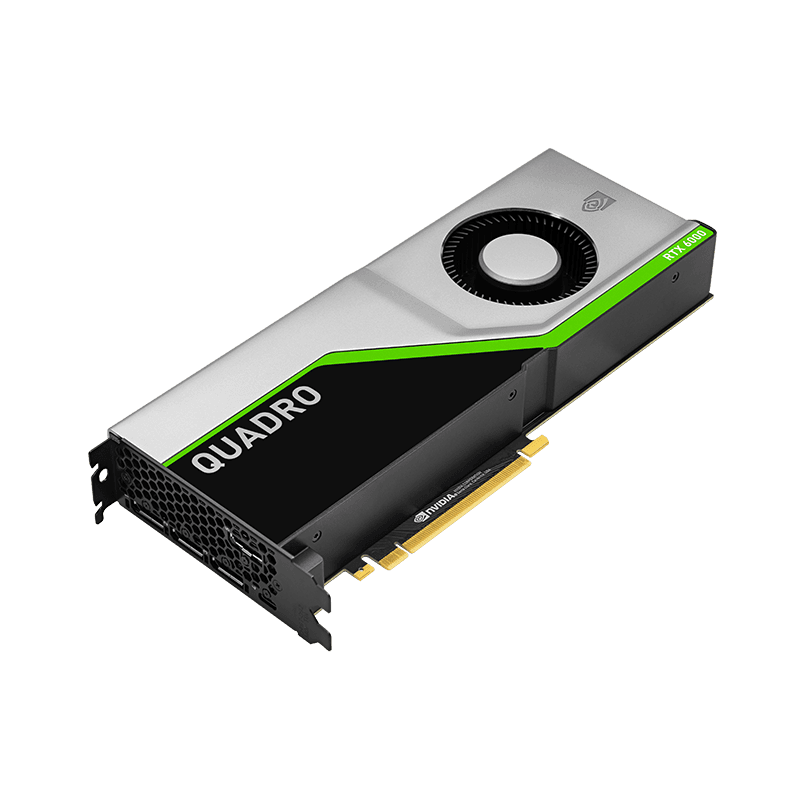
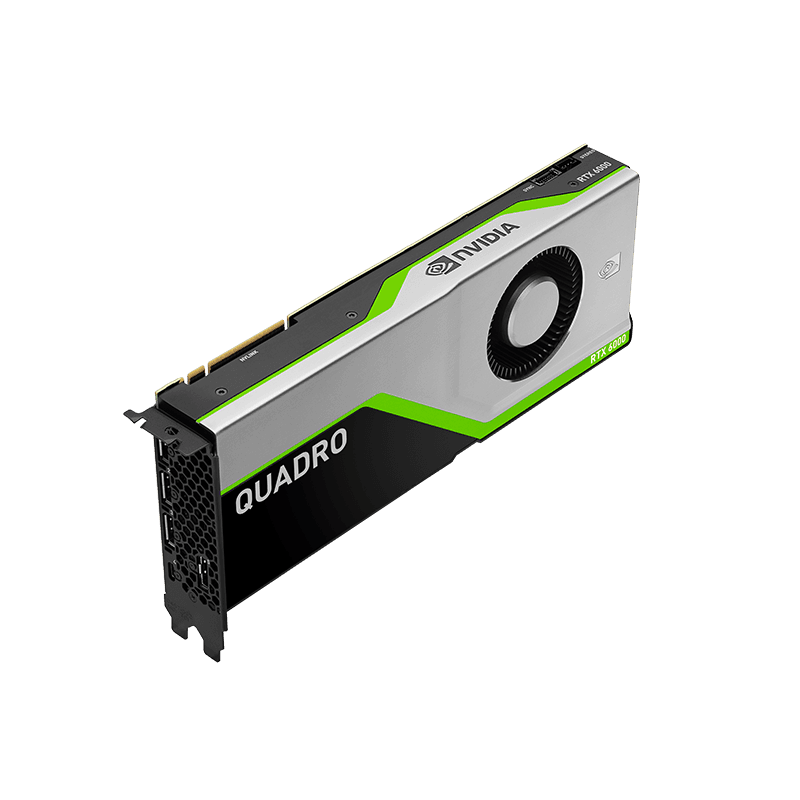
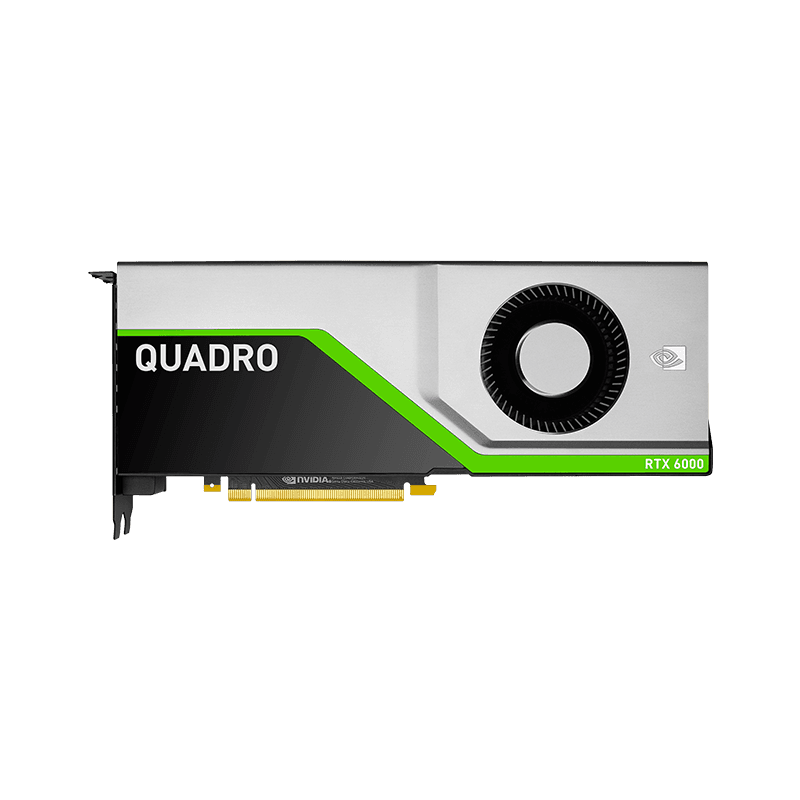
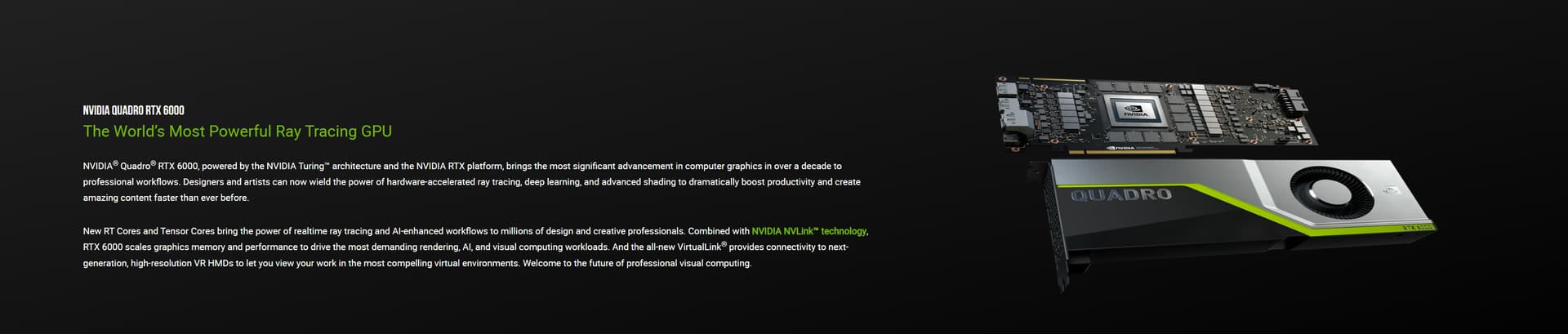
PNY NVIDIA Quadro RTX 6000 Professional Graphics Card, 24GB GDDR6 ECC, 4608 CUDA Cores, PCIe 3.0 x16, 672GB/s Bandwidth, 4x DisplayPort 1.4, 8K Support | VCQRTX6000-EDU-BSP
Model :
SKU : GC-PNY RTX 6000 24GB
Revolutionary Realtime Ray Tracing Acceleration
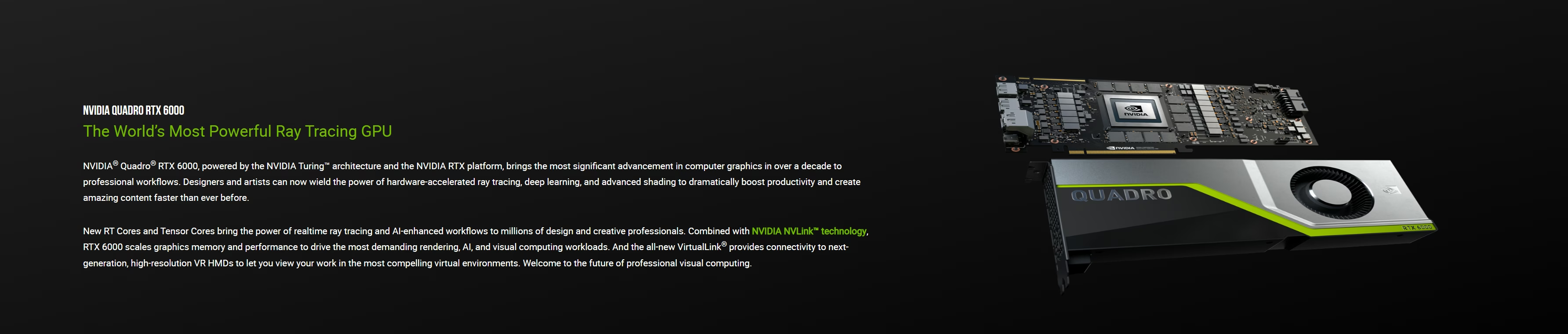
Incorporating new hardware-based ray tracing engines, Turing is the industry’s first graphics processor enabling real-time ray tracing. A single NVIDIA Quadro RTX 6000 board can render complex professional models with physically accurate shadows, reflections, and refractions to empower users with instant insight. Working in concert with applications leveraging APIs such as NVIDIA OptiX, Microsoft DXR and Vulkan ray tracing, systems based on NVIDIA Quadro RTX 6000 will power truly interactive design workflows to provide immediate feedback for unprecedented levels of productivity.
RT Cores
New dedicated hardware-based ray-tracing technology allows the GPU for the first time to real-time render film quality, photorealistic objects and environments with physically accurate shadows, reflections, and refractions. The real-time ray-tracing engine works with NVIDIA OptiX, Microsoft DXR, and Vulkan APIs to deliver a level of realism far beyond what is possible using traditional rendering techniques. RT cores accelerate the Bounding Volume Hierarchy (BVH) traversal and ray casting functions using low number of rays casted through a pixel.
Enhanced Tensor Cores
Purpose-built for deep learning matrix arithmetic at the heart of neural network training and inferencing functions, Turing GPUs include enhanced Tensor Cores that accelerate FP16 / FP32 matrix operations in addition to INT8 and two new INT4 and INT1 (binary) precision modes. Independent floating-point and integer data paths allow more efficient execution of workloads using a mix of computation and addressing calculations.
Mesh Shading
Provides a compute-based geometry pipeline to speed processing and culling for geometrically complex models and scenes to improve performance by up to 2x.
Motion Adaptive Shading
Offers more granular control over how GPU horsepower is distributed (i.e. more cycles applied on the detailed areas of a scene and fewer on the less detailed areas) to increase performance and at the same image quality, or produce similar image quality with a 50% reduction in the time required to generate shaded pixels.
Variable Rate Shading (VRS)
More control over pixel shading rate; efficient for effects like motion, blur, foveated shading. This capability enables shading and geometry samples to process at different rates for more efficient execution.
Texture Space Shading
Decouples shading from screen space, improving shading efficiency and reuse.
Multi-View Rendering (MVR)
Extension of Single Pass Stereo rendering multiple views in a single pass with unique view origin positions or view directions.
High Speed GDDR6 Memory
Built with 24GB of state-of-the-art GDDR6 memory delivering 55% greater throughput than the previous-generation GDDR5x technology, NVIDIA Quadro RTX 6000 is well-equipped to handle latency-sensitive applications handling large datasets.
Error Correcting Code (ECC) on Graphics Memory
Meets strict data integrity requirements for mission critical applications with uncompromised computing accuracy and reliability for workstations.
Encode/Decode Engine Enhancements
H.265 encode bitrate/quality improvements to modulate performance to reduce bitrate (e.g. ~6% at the same performance level, ~11% with reduced performance).
Vidmem output for encoded bitstream and motion vectors to accelerate post-processing for end-to-end GPU workflows.
Optical flow at 4 x 4 granularity for improved video frame interpolation/extrapolation, object tracking, motion segmentation, action recognition, etc.
I-frame only decode for H.265 and HEVC to allow inferencing with I-frame only to speed use cases such as video surveillance.
VP9 10-/12-bit decode to enable VP9 HBD content decoding.
TURING VR
Ray tracing and variable rate shading enhance visual quality, while Multi-view rendering provides wider field of view, support for next-generation HMDs and displays. The RT Cores provide for accurate acoustic simulations and VirtualLink makes VR setup easier than ever with a single cable connection.
NVIDIA RTX Professional GPU – Specifications
CUDA Cores
4608
RT Cores
72
Tensor Cores
576
RTX-OPS
84 TOPS
Ray Tracing Performance
10 Giga Rays/sec
FP32 Performance
16.3 TFLOPS
FP16 Performance
32.6 TFLOPS
INT8 Performance
206.1 TOPS
AI / Tensor Performance
130.5 Tensor TFLOPS
Memory
24 GB GDDR6 (ECC)
Memory Bandwidth
672 GB/s
Interface
PCI Express 3.0 x16
Display Outputs
4 × DisplayPort 1.4 1 × VirtualLink (USB-C)
Max Resolution
7680 × 4320 @ 60Hz (8K)
Power Consumption
260 W (standard) Up to 295 W (with VirtualLink)
Use Case
Professional Workstations, AI, Rendering, Simulation
Description
Revolutionary Realtime Ray Tracing Acceleration
Incorporating new hardware-based ray tracing engines, Turing is the industry’s first graphics processor enabling real-time ray tracing. A single NVIDIA Quadro RTX 6000 board can render complex professional models with physically accurate shadows, reflections, and refractions to empower users with instant insight. Working in concert with applications leveraging APIs such as NVIDIA OptiX, Microsoft DXR and Vulkan ray tracing, systems based on NVIDIA Quadro RTX 6000 will power truly interactive design workflows to provide immediate feedback for unprecedented levels of productivity.
RT Cores
New dedicated hardware-based ray-tracing technology allows the GPU for the first time to real-time render film quality, photorealistic objects and environments with physically accurate shadows, reflections, and refractions. The real-time ray-tracing engine works with NVIDIA OptiX, Microsoft DXR, and Vulkan APIs to deliver a level of realism far beyond what is possible using traditional rendering techniques. RT cores accelerate the Bounding Volume Hierarchy (BVH) traversal and ray casting functions using low number of rays casted through a pixel.
Enhanced Tensor Cores
Purpose-built for deep learning matrix arithmetic at the heart of neural network training and inferencing functions, Turing GPUs include enhanced Tensor Cores that accelerate FP16 / FP32 matrix operations in addition to INT8 and two new INT4 and INT1 (binary) precision modes. Independent floating-point and integer data paths allow more efficient execution of workloads using a mix of computation and addressing calculations.
Mesh Shading
Provides a compute-based geometry pipeline to speed processing and culling for geometrically complex models and scenes to improve performance by up to 2x.
Motion Adaptive Shading
Offers more granular control over how GPU horsepower is distributed (i.e. more cycles applied on the detailed areas of a scene and fewer on the less detailed areas) to increase performance and at the same image quality, or produce similar image quality with a 50% reduction in the time required to generate shaded pixels.
Variable Rate Shading (VRS)
More control over pixel shading rate; efficient for effects like motion, blur, foveated shading. This capability enables shading and geometry samples to process at different rates for more efficient execution.
Texture Space Shading
Decouples shading from screen space, improving shading efficiency and reuse.
Multi-View Rendering (MVR)
Extension of Single Pass Stereo rendering multiple views in a single pass with unique view origin positions or view directions.
High Speed GDDR6 Memory
Built with 24GB of state-of-the-art GDDR6 memory delivering 55% greater throughput than the previous-generation GDDR5x technology, NVIDIA Quadro RTX 6000 is well-equipped to handle latency-sensitive applications handling large datasets.
Error Correcting Code (ECC) on Graphics Memory
Meets strict data integrity requirements for mission critical applications with uncompromised computing accuracy and reliability for workstations.
Encode/Decode Engine Enhancements
H.265 encode bitrate/quality improvements to modulate performance to reduce bitrate (e.g. ~6% at the same performance level, ~11% with reduced performance).
Vidmem output for encoded bitstream and motion vectors to accelerate post-processing for end-to-end GPU workflows.
Optical flow at 4 x 4 granularity for improved video frame interpolation/extrapolation, object tracking, motion segmentation, action recognition, etc.
I-frame only decode for H.265 and HEVC to allow inferencing with I-frame only to speed use cases such as video surveillance.
VP9 10-/12-bit decode to enable VP9 HBD content decoding.
TURING VR
Ray tracing and variable rate shading enhance visual quality, while Multi-view rendering provides wider field of view, support for next-generation HMDs and displays. The RT Cores provide for accurate acoustic simulations and VirtualLink makes VR setup easier than ever with a single cable connection.
Specification
NVIDIA RTX Professional GPU – Specifications
CUDA Cores
4608
RT Cores
72
Tensor Cores
576
RTX-OPS
84 TOPS
Ray Tracing Performance
10 Giga Rays/sec
FP32 Performance
16.3 TFLOPS
FP16 Performance
32.6 TFLOPS
INT8 Performance
206.1 TOPS
AI / Tensor Performance
130.5 Tensor TFLOPS
Memory
24 GB GDDR6 (ECC)
Memory Bandwidth
672 GB/s
Interface
PCI Express 3.0 x16
Display Outputs
4 × DisplayPort 1.4 1 × VirtualLink (USB-C)
Max Resolution
7680 × 4320 @ 60Hz (8K)
Power Consumption
260 W (standard) Up to 295 W (with VirtualLink)
Use Case
Professional Workstations, AI, Rendering, Simulation
D0000.00
Adarc computer uae's largest gaming PC, laptop, computer accessories dealer and have large varieties of products.
D0000.00
Adarc computer uae's largest gaming PC, laptop, computer accessories dealer and have large varieties of products.
D0000.00
Adarc computer uae's largest gaming PC, laptop, computer accessories dealer and have large varieties of products.
D0000.00
Adarc computer uae's largest gaming PC, laptop, computer accessories dealer and have large varieties of products.